
7. The Activism Trap
Stories we own vs stories we share

Hi there! If you’re popping in for the first time and want to learn some background on my in-process film, How to Build a Fire, and what this newsletter is all about, here’s where to start: 1. The Experiment, and 2. The Film. Thanks for reading.
On election night almost a full decade ago, I sat on a couch in the home of my best friend and his partner in Carrol Gardens, Brooklyn, staring at impossible shapes on a TV screen. The silences had become long between us. The plates of homemade pasta were quickly cleared, the wine glasses drained or set aside, and instead of strolling to the planned party at the corner of President and Clinton streets, people crawled into holes.
I went out onto the eerily quiet street, wired, keenly aware that I’d switched into an “Emergency mode” like one I’d experienced in a canoe in a lightning storm when I was fourteen. Everything was heightened, and it was crystal clear that action was needed, but this time I had no idea which way to paddle.
I went to my local bar to talk to people. Inside, I scanned the room for anyone not laughing or crying, someone looking around with the same shit-scared energy that was pulling at my chest. I saw a lanky guy nursing a high life, whale-eyes bouncing back and forth between screens. I sat down, ordered one for myself, whiskey shots for both of us, and we started trying to nibble away at the edges of what had just happened, like two men unwittingly forced to eat a king-sized down comforter. I wish I remembered his name.
Like me, he was confounded as to what he could do. “Well what DO you do?” I asked him. By that time, to feel better about myself, I’d probably rattled off my own sparse history of political engagement: growing up in DC, the lefty son of a lobbyist and an activist; the protests and marches; the light volunteerism for Obama and Clinton; highly self-important phone-bank events… “Nothing, really,” he replied, thinking I’d only meant in activism. I hadn’t, though. I wanted to know what he did in life, because it was feeling to me that the world-shifting scale of Donald Trump becoming president presented two options: toss careers aside and dedicate our lives to a fight, or find ways to marry the things we were already good at to the work to come. It turned out he was a carpenter, and so we talked about ways in which he could donate his skills to building sets for political rallies, literal infrastructure under which the resistance could operate. We talked to a few other folks. We all shared what we did, spitballed about how we might be of use, drank a bunch more. I left feeling like my energy had some more direction, like I’d done some good. And the next morning I started to systematically forget my own advice and fall into an Activism Trap.
Not everyone falls into such a trap. It is much more prevalent among Americans, even more if you are white, come from some means, and have been some version of your own boss. And it is most virulent among men. I check all those boxes. The trap for suddenly politically activated folks on this spectrum is one of ownership. The day after the election, and for several weeks following, I traveled around with a notepad, furiously scribbling ideas like a crazed cartoon Beethoven: organization names and logos, lists of principles, catch-phrases and TV commercials. I bought domain names, formed Facebook groups, and secretly fancied myself some inspired justice crusader who was going to make his mark on turning this tractor-fire around. Joining existing communities and organizations already in the fight was at the bottom of my list. I wanted an idea, a platform, that was mine.
This Activism Trap (which is not unique to activism- that just happens to be the vehicle here) has to do with American exceptionalism, bootstrap and “great man” mythologies, white privilege, the patriarchy, founder-syndrome, ego, and loneliness, among other things. And I would learn, even when I started to recognize myself inside it, that it was much bigger and more complex than I imagined. (Clearly, I’ve not fully escaped: no doubt there are plenty of academic terms for the thing I’m talking about, but I had to cook up my own.) It took another, better connected white guy to get me to the next level…
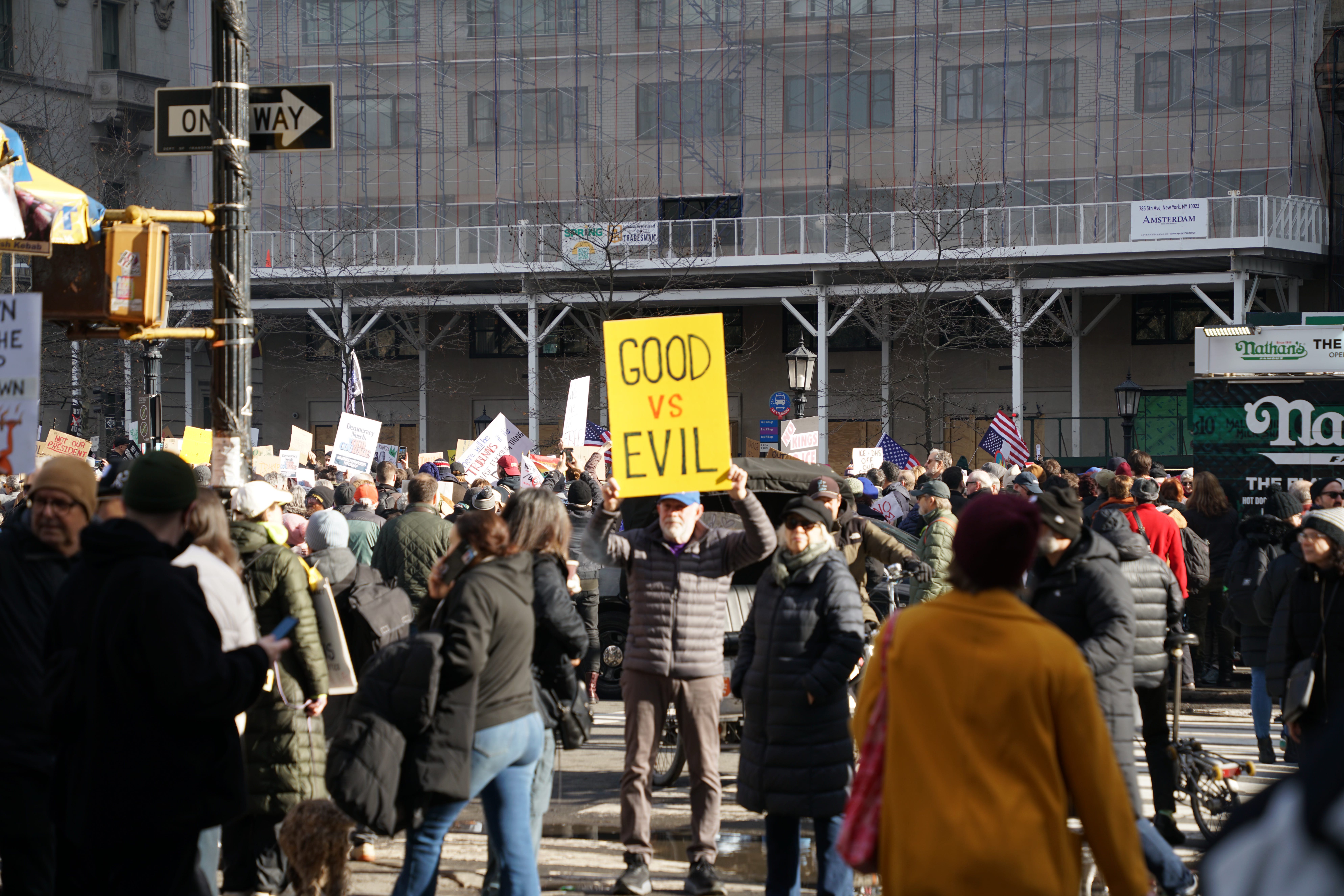
Throughout that November, Brooklyn belched with bipolar paroxysms of rage and fear at events of every size. The most organized and impressive one I went to was put together by the artist, writer, and House of Cards show-runner, Beau Willimon. (This was the start of his Action Groups Network which went on to do extremely effective local organizing work— so I may tease, but Beau is a real one.) He led a very sober and motivational meeting in a packed Gowanus warehouse which culminated in a whiteboard list of causes, and a dividing of the room into groups that wanted to organize around each given cause. The room was almost entirely people in TV and film, so I was surprised that nobody was proposing a “Media” group to do the thing we ostensibly already all did, until a woman named Kathryn Jones stood up and spoke the thought aloud. Hers was the group I joined: a small cadre with the mission of creating content for these other nascent groups, or any other resistance cause in need. A year later, we were one of the only ones still in existence that started that day, primarily because we weren’t trying to reinvent the wheel, or more importantly, ourselves.
That group became an organization called Collective Agency, a mostly-volunteer digital ad/content agency, which worked with a long list of orgs like the Women’s March, Swing Left, Emily’s List, and Indivisible. (It’s mostly retired now, but there’s another interesting group with the same name, in case you google) It was fulfilling and sometimes exciting work, but it ended up revealing to me the institutional layer of the Activism Trap.
Liberal politics holds up the plurality, the notion that every voice deserves to be heard, as sacrosanct. This is a wonderful message, and a nightmare for messaging. If every voice has equal weight, how do we possibly agree on what to say and how to say it? Liberalism empowers the individual, but with power (regardless of the Spider Man quote) comes entitlement. And what Collective Agency found in trying to rally different liberal orgs around common causes or messaging, was that each of them (and often times arguing parties within them) wanted to OWN that message. They did not want to join. They had fought for their voice to be heard, and that voice deserved to be unique. Again: I am philosophically aligned with the spirit of this. But when Republican messaging machinery was cranking out party-line talking points from tip to tail, regardless of org, institution, or reality, how were we ever supposed to compete? The infighting and purity tests within the messaging space Collective Agency occupied became too exhausting for many of us, so we backed into different corners or away entirely.
It’s a very different world now, and I’ve been away from that kind of activism for a while. Since then I have seen extraordinary new, galvanizing things happen in the fight, as well as what seems like a few political lifetimes of heartbreak and horror. I believe there are wonderful people doing wonderful, effective work to fight against the colossal hydra of corruption and incompetence at the center of our government, but my heart has needed to tend to the rest of my life for a while. And, unexpectedly, out of that time and space and tending has come this film, How to Build a Fire.
The film is not a platform for some pithy political message, and it does not attempt to reinvent any wheels as a piece of art. It comes from a painfully earnest place in me that believes we are all better than the reductive versions of each other we’ve been sold in an attention economy fueled by perpetual panic. One of the characters is stuck in her own Activism Trap, and the film is pretty simply about putting complicated humans, from seemingly different worlds in a room together, in order to recognize those complications, and how common the world they occupy really is. It’s me trying to marry the thing I love doing the most to the things I care about, hopefully without falling into too many traps.
And when it’s finished, one of the ways we’ll be sharing it with the world involves a reengagement with activism and advocacy that really excites me. We’re planning to partner with organizations across the country (and perhaps even beyond) who are dedicated to political depolarization. We hope to plan screening events with attending audience conversations to talk about what the film may have brought up for people, to recognize the painfully difficult divides we’re all navigating, and see how we might become better listeners in real-life rooms, rather than proclaimers in the dark of the internet. I’ll get into much more about the ideas and possibilities there in my next post.
The Activism Trap is one of our own making, in which the righteousness and singularity of our ideas closes us off from a wider world in which those ideas need to converse and adapt to survive. Clearly this applies to much more than just activism or politics. It’s about storytelling, and how narrow, individualized, and selfish our storytelling is becoming in the hyper-curated existence at our fingertips now. But good storytelling, expansive storytelling, is the opposite of selfish. I hope that’s what we’re able to accomplish. Because when it’s done right, it’s not a trap. It makes us feel more free.
Just a quick reply to say I soo agree with what you're doing with your film. As a long time organizer and activist, including working on 2 - 3rd party political campaigns I've seen what you describe in person. My film takes a different angle but has a similar "goal". There's more that we have in common than what divides us.
Love this plan for screening events where ideas from this powerful film can be actualized in the present!