
The Film

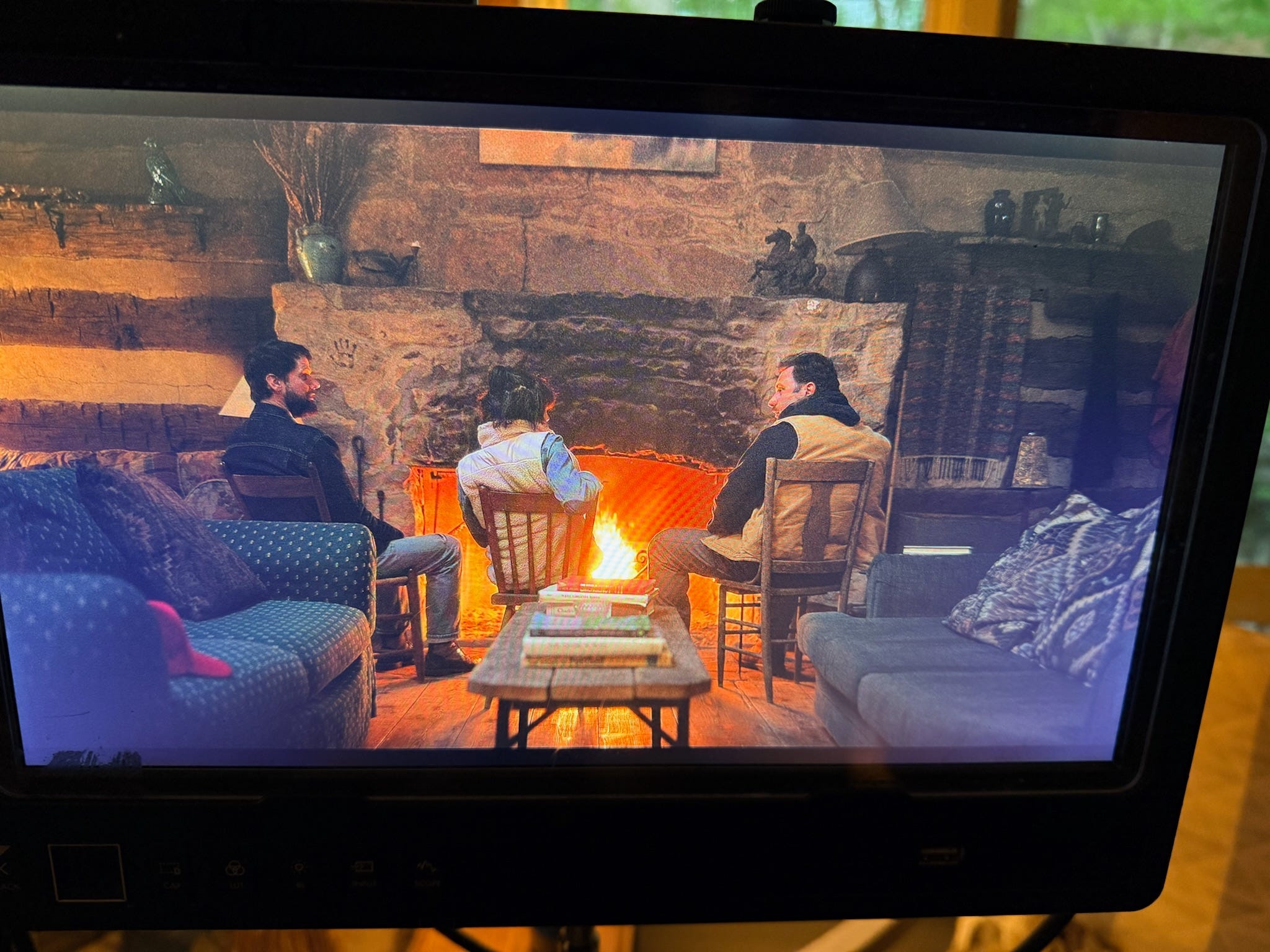
My aim with this newsletter is to explore much more than purely the sausage-making of an indie film. But because the major themes and machinations of our film, How to Build a Fire, are gonna inform a lot of my writing here, it feels important to tell you a bit more about the story and our intentions, so you know where this all came from and we’re headed.
[If you missed my first installment, it’s a good intro- so you may want to read that first RIGHT HERE]
What follows is a synopsis of the film and a director’s statement:
In March, 2026, two liberal friends from NYC escape to an old family hunting lodge in West Virginia with a pact not to talk about men or politics for the weekend. The place is heated by a grand old fireplace, the only wood they can find is wet, and these snowflakes are not exactly experts at building fires. They call in a wood delivery, and when it shows up, the guy’s got an iconic red hat on his dash. An argument ensues, and when our West Virginian tries to cut out, his truck won’t start. There’s no cell service, so he needs to use their landline, and listening to his side of the convo, our NYers realize that this guy’s life is just as fucked up as theirs. As the three wait for a tow, they’re forced to just occupy space together— with all the tension, détentes, strangeness, and surprises that that space creates— and eventually build a fire together to stay warm.
How to Build a Fire holds desperation in one hand and hope in the other. Desperation at the horrific state of our nation’s soul, its politics pushed by profit engines further and further into fear and division. Desperation at the state of the film industry, dismantled by similar profit engines, transformed into a place where independent artists seemingly must win concurrent lotteries to even be able to make their work, let alone get it seen. But also hope— that this singular medium can hold our common humanity up to the light. That seeing that humanity in one another can quiet the noise around us. That listening to each others’ stories can, at the least, begin to rebuild a foundation of common interest. And hope that as artists, if we hold fast to our truest impulses and surround ourselves with likeminded collaborators, we can possibly change the paradigm through which our work reaches the world.
That’s all some fancy language to say that we’re making a film about real people, right now, and we’re doing it completely independently from start to finish.
I grew up near Washington DC, and it wasn’t till college that I understood that not everyone’s dinner table was a political debate. Those debates were always civil though, even when the aisle was wide between participants. Every October my family would escape the DC bubble with two others to a magical old lodge in West Virginia, one of my favorite places in the world, where we’d spend a weekend making apple butter and apple cider, eating, drinking, telling stories, and singing songs around a fire. The place is steeped in love and family in all its complex shades and colors. I couldn’t dream of a better canvas. I did dream of someday shooting a film there.
In 2016 I helped to start an organization that created content for progressive non-profits, causes, and candidates. Within a few years we were beginning to understand the massive problems of internet-based political warfare. Loud and scary would always win, and ownership of the message always trumped collaboration. Clearly, it all got much worse from there.
It took me a while to blend my passions. I’ve tried as a budding filmmaker to make the kind of movie that I thought the industry wanted rather than dig into the issues that are important to me. It’s hard to find the courage to be earnest in an industry which seems to want the opposite. How to Build a Fire is not an A24 film. It’s not cool, or trying to be. What it is, is an honest portrayal of three Americans trying to navigate a dark, scary, and volatile time, having to simply recognize each other’s humanity. And it’s being made by unbelievably dedicated and talented artists, all underpaid- but equally paid, and signed on because they are compelled to do their work, and they believe in the project.
We’re taking that same spirit into our distribution plan: artist made, artist delivered. We will submit to festivals, but are clear-eyed about the growing obsolescence of the festival model. The larger plan is to use the film as a fundraising tool to build a robust marketing budget, engage a similarly inspired digital marketing partner, and do product-style, hyper-targeted advertising. Ever bought socks through an instagram ad? How about a truly independent film for $4.99? We’ll have our own, dedicated online theater, not hemmed in by the algorithms and overload of existing platforms. The process will be simple and direct, and the profits will go to the makers, not the gatekeepers.
The format of the film itself is a forward-looking experiment too. At around seventy minutes long, it aims for that audience space already deeply carved by hour-long episodics. A simple conceit, a full story told, but with no cliffhangers or commitment, and not self-importantly demanding the two-to-three hours that so many feature films unnecessarily do these days. A character-driven, timely, indie micro-feature is exactly the kind of film we think there should be more of. And we believe there’s a path to be blazed.
In this wildly unstable time, I just keep returning to what I hope is a simple way forward: that all we can do is surround ourselves with people we love and tell the truth. I won’t try to read the tea leaves of the world or our industry here. What I will do is expand upon all the ideas I just laid out to you in the very spirit that drives them— to keep creating and fostering a community of artists who energize each other, and keep on lighting little fires to see us through the dark.
Thanks for being here with me.
-Jamie
Thanks! In essence, yes. But the leading concept is to use the finished film to attract investors and create a marketing budget out of that investment pool. Do hyper-targeted marketing, sell the film directly to audience, recoup for investors/creators. If there is profit, a second round of marketing funding is totally possible!
I’m very happy to have an offering that invites us all into a realm of access rather than further separation. I know you have longer-term goals, but this film looks promising to one bewildered by the division and hostility.