
Write to Resource
How to add priceless value to a micro-budget film

I am by no means a veteran filmmaker. I’m still at the start of all this. I’ve written and directed handful of shorts, have one feature under my belt as a writer/actor, and How to Build a fire is the first feature I’ve written and directed, so I don’t typically like to dispense advice. But every now and then at a film festival Q and A (and possibly because my beard is grey), a younger person in the audience will ask what advice I might have for young filmmakers. I don’t reinvent any wheels here— I stick to a basic three:
Spend money on sound: your eyes will forgive what your ears will not.
Embrace the fuck-ups: limits, obstacles, and the unexpected can yield the sweetest creative fruits.
Write to resource. What do you have access to that nobody else does? A big old attic? A crazy aunt? Does your family own a dilapidated roller-rink? A vintage car? A sheep farm? Write about it. Whatever it is, the more personal, the deeper your relationship to that thing, the better. That relationship will come out in your writing. It will be specific and felt and yours— the essential foundations of a good film.
Don’t get me wrong, I’m not saying you need to let a resource dictate the story you’re compelled to tell. Always stay true to whatever it is you want to explore, but let those unique resources be your guardrails, your palate, your creative challenge.
I had damn near forgotten about this advice as I was struggling to write a psychological thriller script for months, and was thankfully and beautifully reminded by a film I saw at the Cordillera Film Festival last year. The Music Store, written and directed by Joe Gillette, is a beautifully simple piece about two brothers taking over the family business— a strip mall music store— after their father dies. Gillette’s writing is funny and melancholic, and his directing is warm, unfussy, and lets the space do so much of the talking. And it has plenty to say because it’s owned by Gillette’s actual family. He grew up there. You can’t buy that kind of instant production value— at least not on the working artist’s budgets (WABs?) that we’re talking about.
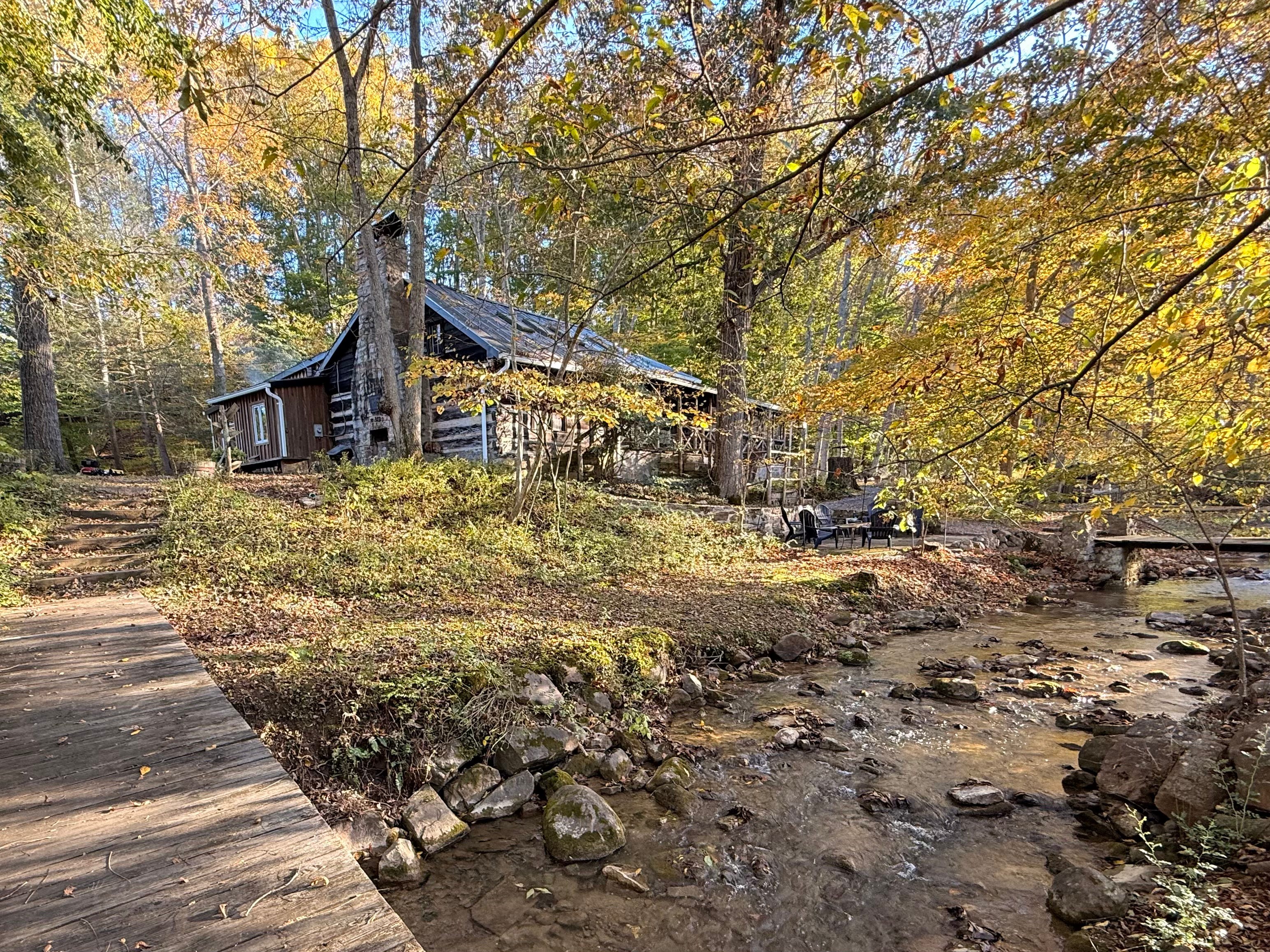
So in addition to The Music Store being a lovely little film you should definitely check out, it was also a palm-to-forehead moment for me. I needed to step out of the void of this high-concept thriller that had been haunting me, and back into creating in a much more personal space. And I knew exactly where I wanted to go: to one of my very favorite places in the world, a hulking old lodge on the eastern panhandle of West Virginia that my family has gone to every year since I was born. The family who owns it is basically a huge extended family to my own, and the space is oozing with history and memory and love. The political themes that I’d been wanting to write about effortlessly slotted into the physical framework, and I was instantly struck by how beautiful it might be to do my favorite thing, with my favorite people, in one of my favorite places.
When H2BAF was starting to really take shape, I took stock of that grand shiny vision and tried to begin managing my expectations. Such a mini-utopia of favorite things in the often volatile environment of a film-shoot was a tall order. I prepared for some heartbreak. None came. Somehow, the good will and excitement only fed upon itself. That extended family wrapped it’s arms around me and the whole production and aided in nearly every part. My producers and I sent pictures of the space out with every crew query, and got yeses from nearly every person who had worked on our past two projects. And the space gave us everything I’d hoped for and more. It became the fourth character, the nurturing grandmother of the piece. The camera falls all the way into the texture of the space, and builds a world that could not have been fabricated full-cloth, even with a budget of millions.
Write to resource. That’s the advice that I’ll make sure to keep on giving myself. I’ll talk more in a later piece about how that relates to writing for specific actors— something I’ve done in every film I’ve made— and the power of specificity in that (even if you don’t end up with that actor in your cast). But for now, I’d just like to send a big thank you to Joe Gillette and the folks behind The Music Store for the inspiration. What resources we have, and what stories we can tell with them.
-jamie
You are many thing, Jamie, including a beautiful writer. Your posts are best reading of the week. Thank you!
Okay, I'm biased... but this is so beautifully written and I know how essentially true it is. Thanks, Jamie