
The Why

In 1989 my mother took my eight-year-old hand and led me inside a small church in Bukhara, Uzbekistan. She was leading a tour for the families of young people who had participated in Peace Child, an organization for which she worked, that brought Soviet and American kids together to devise and perform a musical about conflict resolution. The American kids who had been in the USSR came back with such incredible stories, that an interest had grown among the families, and, latching on to this potential further proliferation of understanding, my mom had volunteered to lead a special trip. In retrospect, the idea may have been seeded by her desire to show her own family what she had seen: to explore the beauty of this other world and the extraordinary likeness of the people within it, people who had been called our enemies for five times as long as I’d been alive.
The church had looked relatively modest from the outside, but inside, nearly every inch of the walls and ceiling were covered in gold. To an eight-year-old, it was a magical, glittering secret. I craned my neck, concocting hidden treasure fantasies. I’d never seen anything like it. I also remember being very confused about the “why” of it all.
That confusion only hardened when we left the church and continued down the half-dirt streets of the ancient city. Old men in tattered clothing sat on the shaded sidewalks. Kids my age, dusty and insistent, begged us for chewing gum, which we had knowingly brought for this purpose. Another group of kids sat on a fence, eying us as we passed. They yelled something and one of them blew a pea-shooter, hitting me in the mouth. My dad yelled back at them and I don’t think they even moved. I was no stranger to being bullied, but it had never been for something so glaringly stark: that I had so much, and they, so little.
I remember asking my mom why the people were so poor when there was a church full of gold. No doubt she said more, but all I recall is “that’s a really good question.”
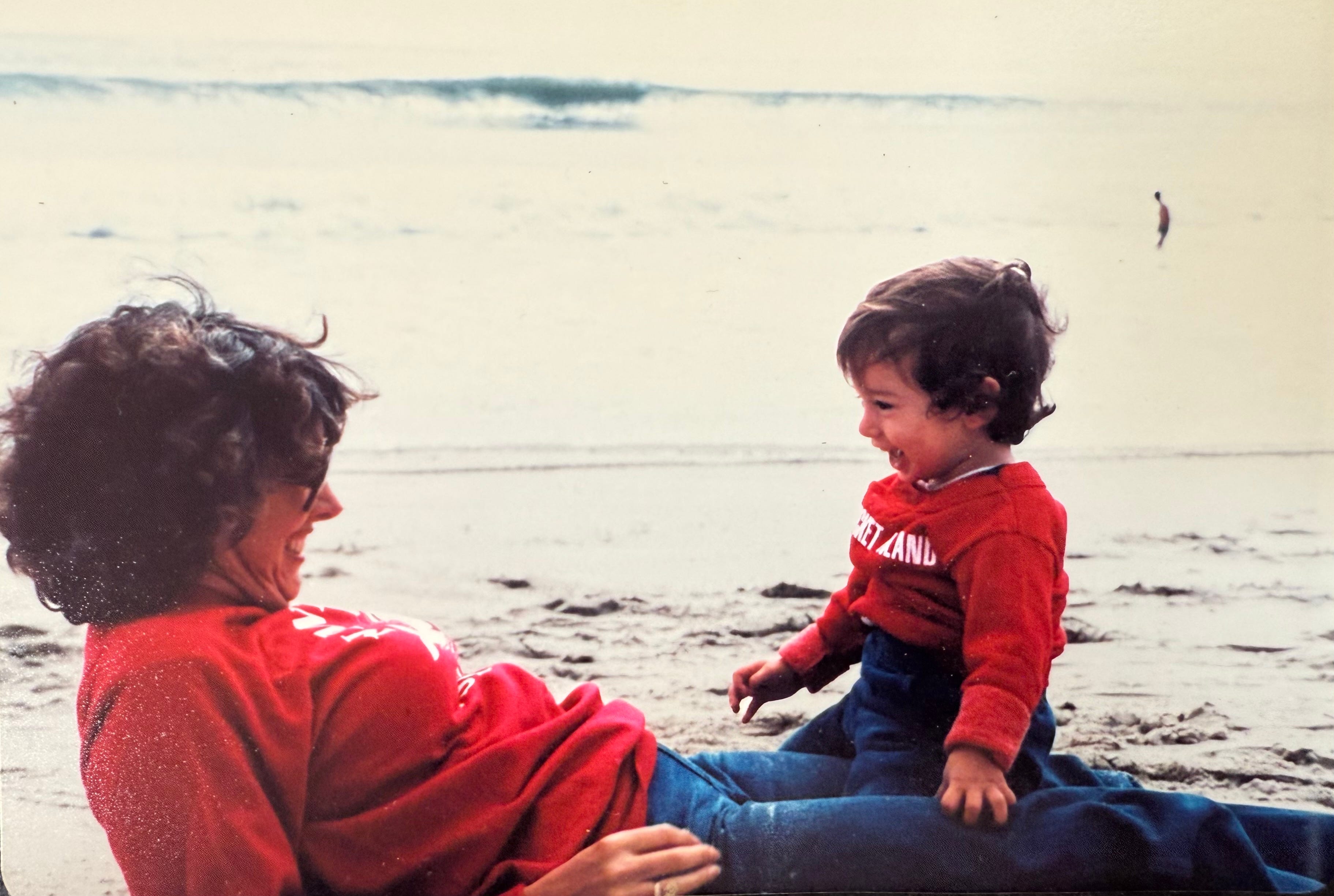
My mother died last year. She was an avid traveler and lifelong peace activist who leapt over cultural, language, and geographical barriers every chance she got to experience the beauty of the world and the magic similarities in every human heart. And I keep being surprised at how many threads in How to Build a Fire lead back to her. This film would not exist without my mom.
At its core, How to Build a Fire is about finding common ground in a politically polarized America. It’s about how powerful it is to merely have to occupy space with a person you have categorized as an enemy. The vastness of our country mixed with the inflammatory shorthand of our anti-communal technologies have eradicated opportunities in which we are obliged to actually be with those “other” people. Instead, we proclaim into agreeable ethers. We don’t ask questions except to prove a point. We don’t listen except to catch a lie or fault.
The film simply compresses the distance between supposed enemies long enough for the listening to begin. It forces three people to contend with the complicated humans behind the stereotypes they’ve constructed, and the shocking scale of what they actually share. It doesn’t perform some drastic change-of-minds. As a matter of fact, the characters retain much of their frustration with each other through the end. It only attempts to open a window of understanding.
I wrote the story to take place in an old lodge in West Virginia owned by dear family friends. My mother’s friend, Fern, was the matriarch of that family, and my mom had a story she loved to tell about the two of them. Fern and my mom did similar work and were actually in Russia together on a different trip in the 80s. They got arrested for taking photos in a market somewhere and were held for questioning by the KGB. It was a bad situation. But then my mom pulled out a set of photos she kept with her. They were photos of where she came from: our house, our tiny town, our relatives, my father, me. And the agent who had been translating visibly softened. So then Fern took out her own family photos and gleefully pointed out her five smiling children, playing in kitchens, in back yards, swimming in the river across the road from that lodge in West Virginia. They were released.
I can’t tell you how many times I’ve heard that story. The pride with which my mom told it was palpable because it was a direct validation of her work and her worldview: that if you just give people a glimpse of the things you love and care about, you can explode their opinion of you. By telling our own stories and listening to others’, we can pull each other out of the shallow molds created by the opportunistic forces attempting to control us. We do not have to agree simply to see each other.
In the lodge hang a few of the pictures Fern showed that day. With the permission of her incredible family (true and incomparable collaborators), those pictures also appear in the film, serving a quite similar purpose as they did in a KGB interrogation room in 1985. They are small windows of understanding. Metaphors for what the film is attempting to achieve.
In another full circle, the son of the creators of Peace Child, a lifelong friend of mine who has worked in philanthropic giving for humanitarian causes the world over, has approached me to be the Impact Producer on the film, helping to connect us to organizations who share in the cause of depolarization and conflict resolution. I’ll speak more (as I learn more) about that exciting development in later posts. One more extraordinary gift.
And so I stand back in total awe that new threads keep appearing to knit this film together, and keep leading back to one place. That “the why” of this film is so clearly my mom. If it is blessed with a modicum of the understanding and grace she brought to this world, then it may do some good.
I met Ellen after Fern had died. I would have liked her, I'm sure.
Lucia inspired through and through! She, and my mother Fern, were such an inspiration and guiding force for so many. They both inspired big action in so many ways . But/and it's the "small windows of understanding" that are so vital to recognize, to nurture. Thank you Jamie for making this film and being a source of inspiration through it and by sharing your process. You are, indeed, your mother's son.